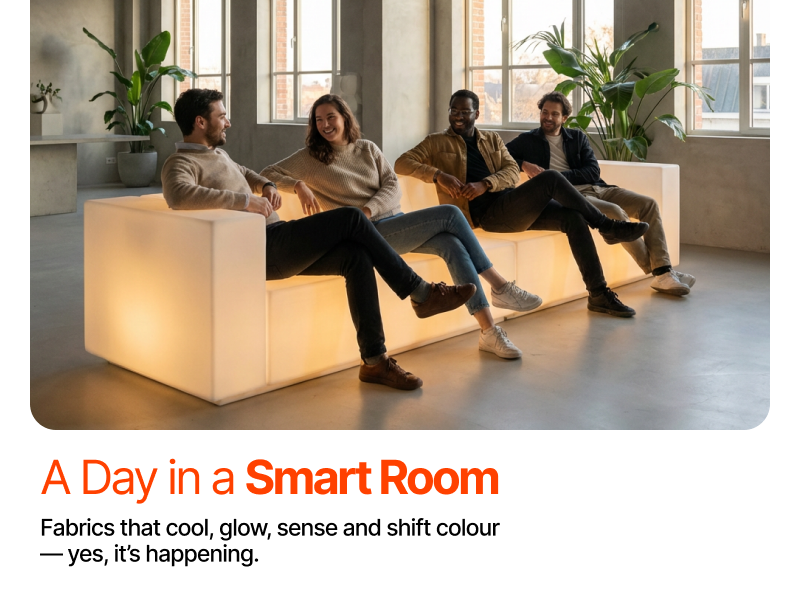
A Day in a Smart Room: How Fabrics Learned to Change Their Mind
Why your sofa might soon blush, cool you down or glow on command — and why that’s actually a good thing
Morning. You wake under bedding that feels pleasantly cool without cranking the AC. The pillow and throw contain tiny microcapsules called phase-change materials (PCMs) that soak up body heat and release it later — smoothing out temperature spikes so you sleep better. PCMs are already used in performance bedding and technical textiles for exactly this reason. (Source: Outlast, iTextiles)
Noon. You wander into a hotel lobby and notice the sofa looks a shade different than when you first arrived. It’s the same sofa — but a strip of fabric has subtly shifted tone to reduce glare. That trick comes from electrochromic coatings or conductive inks integrated into textile panels; apply a small voltage and the surface changes colour or opacity. Early demos and lab prototypes show this is real tech (still graduating from research to commercial runs). (Source: MDPI , ScienceDirect
Nearby, a chair senses someone’s posture with textile-based sensors and gives a tiny nudge of lumbar support. Textile triboelectric or piezo layers can sense motion and even harvest tiny amounts of energy from movement — good for power-sipping sensors and delightful interactive moments. (Source: MDPI , ResearchGate )
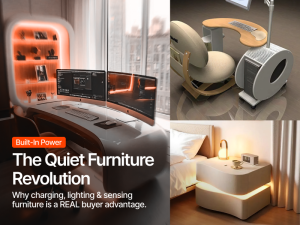
Evening. The lounge shifts into “event mode.” Wall panels wash into the brand’s evening palette without anyone zipping off covers — a mood change driven by embedded drivers and electroluminescent accents beneath the cloth. The room feels new, the same furniture takes on different atmospheres, and the brand gets a fresh visual without swapping entire sets. Big retailers have already moved everyday tech closer to customers — for example, wireless charging pads integrated into lamps and tables (a mainstreaming cue you might have noticed from larger furniture brands). (Source: Wired , EEPower )
Why this matters (and why it’s not just showy tech)
Programmable textiles aren’t about gimmicks. They give tangible wins:
Everyday comfort that people notice. A cooled pillow or a thermally adaptive cushion is a small pleasure — and guests notice small comforts. PCMs are proven in bedding and apparel markets.
Less waste, more looks. One sofa can play many moods via colour or light changes, cutting the need for seasonal re-upholstery. That’s a sustainability and cost win if designers get creative.
Smarter operations. Sensor textiles can tell housekeeping which rooms or seats were used, reducing guesswork and unnecessary cleaning. Textile energy harvesters make low-power sensing more viable.
Shareable moments. A textile wall that blushes on cue is PR-friendly — people post, brands get attention, and experiential retail wins footfall.
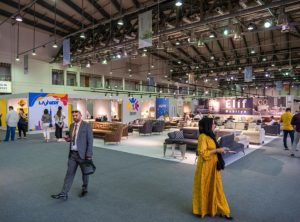
All that matters more because the regional home & interiors market is growing — making investments in guest experience and flexible assets attractive. For regional context, the UAE home-decor market was estimated at USD 3,762.7 million in 2024, and the Middle East furniture market is also large and expanding. That’s part of why designers and hoteliers are experimenting. (Source: IMARC Group)
What actually works today (practical, not hypothetical)
PCMs for thermal comfort: Commercial and available now — try a PCM pillow or throw to feel the difference.
LEDs & conductive-thread accents: Great for branding and wayfinding — just plan tidy wiring and service access.
TENG / piezo textile sensors: Excellent for occupancy and interactive demos; research shows real harvestable outputs for low-power sensors.
Electrochromic colour shifts: Gorgeous and promising — currently better for accent panels than whole sofas due to durability & washability challenges.
The boring bits you should know
Washability & durability are the real blockers for hospitality: anything in a hotel needs to survive cleaning and heavy use. Many prototypes fail first-wash tests, so designers use removable covers or modular electronics. (Source: Seedia)
Power & maintenance: active textiles need drivers, batteries or wired power — plan maintenance cycles and quick-swap modules.
Cost: advanced inks, conductive yarns and electro-materials cost more; early adopters tend to be premium hotels, experiential retail and design-first homes. (Source: ACS Publications)
Want to try one? Tiny pilot ideas
PCM bedside cushion — test guest comfort for 30 nights and survey satisfaction.
Mood strip panel — a small electrochromic accent in a lounge to test reaction and durability.
Sensor seat — deploy a triboelectric sensor cushion to log occupancy and refine housekeeping schedules.
Start small, measure one KPI, and you’ll have proof — not promises.